
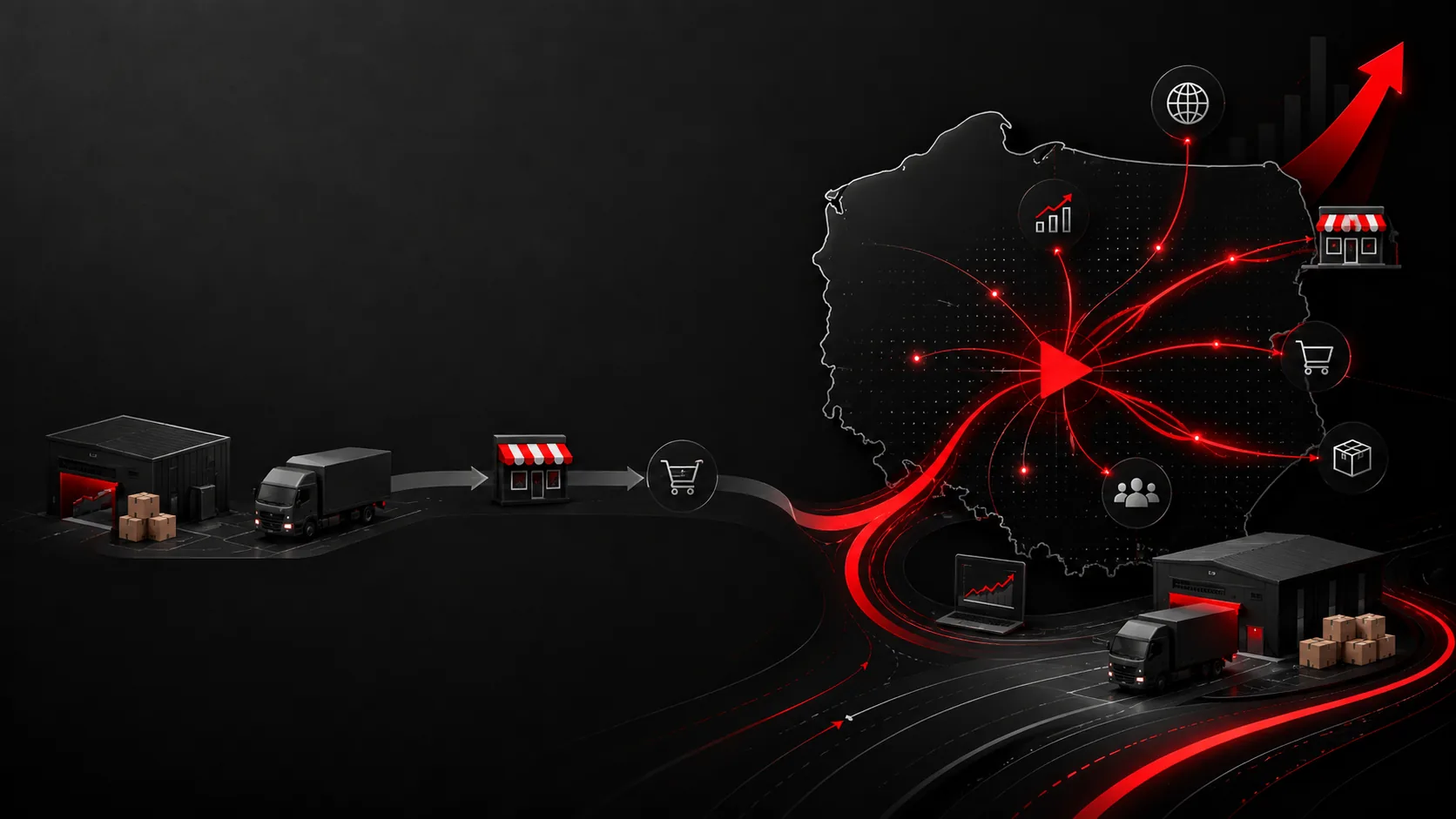
What does a traditional distributor do?
The traditional distribution model is primarily focused on moving products through an existing commercial network. Depending on the category, a distributor may provide purchasing and inventory, warehousing, logistics, reseller relationships, invoicing, customer service and basic sales activity.
For established products with existing demand, this can work very well. The problem appears when a brand is still unknown in Poland.
A distributor may have twenty, fifty or several hundred brands in its portfolio. Its commercial team will naturally prioritise the products that generate demand and revenue fastest. A new brand can therefore become technically available in Poland without actually building meaningful market presence.
What does a market operator do differently?
A market operator starts from a broader objective: build the local business, not only the distribution channel.
This can include market analysis, positioning, localisation, brand communication, website development, digital marketing, lead generation, sales development, channel acquisition, partner management, performance measurement and distribution when appropriate.
The key difference is responsibility. A distributor primarily asks: How can we sell this product through our network? A market operator asks: What needs to happen for this brand to become commercially successful in Poland?
Why this distinction matters
Imagine a premium international manufacturer entering Poland. The product is listed by a local distributor, but there is no Polish website, Google searches provide little useful information, the brand does not communicate locally, retailers do not understand the positioning, sales teams lack good materials and no campaigns generate demand.
The problem is not necessarily distribution. The problem is market development. Adding another distributor may not solve it.
When should you choose a distributor?
A traditional distributor can be the right solution when the category is established, demand already exists, customers know the brand, the product is easy to explain, the distributor has strong relevant channels and local marketing requirements are limited.
When does a market operator make more sense?
Consider a broader market-entry model when the brand is new or underdeveloped in Poland, strong localisation is required, marketing is important to sales, new channels must be built, the company needs active local business development or management wants better control over market development.
The two models are not mutually exclusive. In many cases, the best structure is market operator + selected distribution partners.
Distribution should be the result of a strategy
Choosing a distributor should not necessarily be step one. The first step should be defining how the brand intends to win in Poland. Only then can the right commercial structure be selected.