
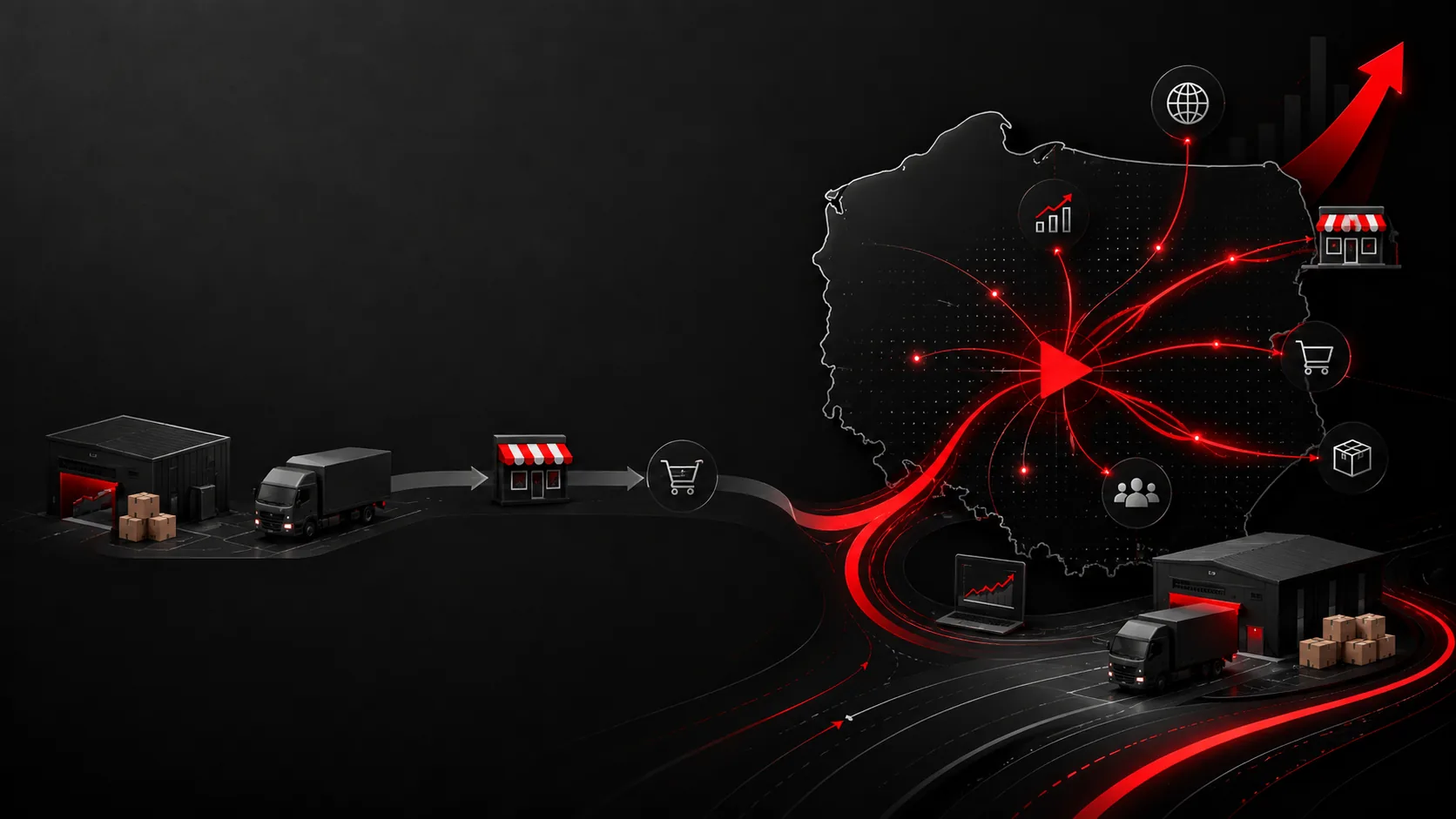
Start with the economics
The first question is not: Can we sell in Poland? Almost any product can generate some sales. The better question is: Can we build a profitable and repeatable business in Poland?
That requires understanding target retail or B2B pricing, distributor margins, reseller margins, logistics costs, marketing costs, currency exposure, payment terms, returns and warranty obligations.
A market can look attractive at revenue level and still be unattractive at contribution-margin level.
Validate demand
Before building inventory, demand can often be tested using relatively low-risk activities.
For B2B brands: targeted outbound, industry outreach, distributor interviews, reseller meetings, sample programmes, pilot customers and trade events.
For B2C brands: landing pages, paid search, social advertising, marketplace testing, pre-orders and small inventory pilots.
The objective is evidence: which audiences respond, what is the acquisition cost, which products attract attention and what objections appear.
Test channels separately
Do not assume the same proposition will perform equally well everywhere. A brand may perform strongly through specialist distributors but poorly through retail, or well in e-commerce but poorly on marketplaces.
Each channel has different economics and operational requirements.
Start with limited inventory exposure
Where possible, early testing can use structures such as direct shipping, small local stock, consignment, pre-orders, third-party logistics and vendor-supported inventory.
This reduces the amount of capital locked into an unproven market.
Measure more than revenue
Early success should not be evaluated only by sales. Track qualified leads, conversion rates, partner interest, customer acquisition cost, average order value, gross margin, repeat orders, sales cycle and channel productivity.
These indicators tell you whether the market can scale.
Move to full distribution when evidence supports it
Once demand becomes repeatable, distribution can become extremely valuable. Local inventory improves availability. Faster delivery improves conversion. Better purchasing terms improve margin. Dedicated commercial relationships support growth.
But these benefits are strongest when they follow market validation.
Do not use inventory to discover whether demand exists. Use market development to prove demand first. Then use distribution to scale it.